State Supreme Court hopefuls clash over AI rules for Washington judges
Regional News

Audio By Carbonatix
3:30 PM on Wednesday, July 22
Tim Clouser
(The Center Square) - Two Washington Supreme Court candidates are split over whether the judiciary should adopt new rules to protect the independent decision-making process from artificial intelligence.
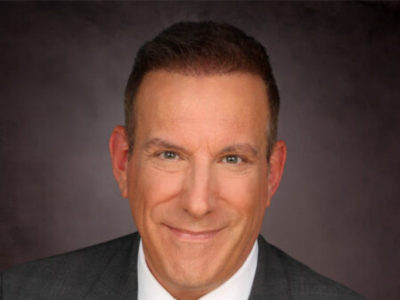
King County Judge Sean O’Donnell and criminal defense attorney Karim Merchant are running for two different seats, but the conversation around AI is bringing them together. Both say the technology can make the judiciary more efficient; their issue is over whether new guardrails are needed to regulate it.
O’Donnell is running against Washington Court of Appeals Judge Ian Birk for Position 4, while Merchant and two others challenge Chief Justice Debra Stephens for Position 7. They aren’t opponents, but their disagreement raises questions over whether existing ethics rules are enough as AI rapidly advances.
“We're at the beginning of the beginning of AI and how judges may use it or not use it, but we have to look prospectively,” O’Donnell told The Center Square. “In two years, I think the landscape will be very different; it’s going to just be much more powerful in ways that are very hard for me to conceptualize.”
The Board for Judicial Administration has advisory principles on the use of AI, emphasizing the need to "zealously" protect public trust and “employ independent judgment” in decision-making.
However, the Code of Judicial Conduct doesn’t have any AI-specific rules around how judges can use AI in the court.
O’Donnell plans to propose a new rule, if elected, prohibiting judges from using AI to make decisions.
New rule?
When asked about his idea, O’Donnell said it’s only a premise right now and that he doesn’t have the actual language yet. He wants to start the conversation to see what the rule could be.
Disclosing how AI was used in a case is one thing the bench and other stakeholders would need to consider, he said.
Merchant told The Center Square that AI shouldn’t substitute human judgment and that any judge or attorney who uses it as a tool must independently verify everything it does. He encouraged the use of AI and said he treats it like a personal law clerk that is available 24 hours a day at his pocket's reach.
“I just don't understand why the current canons aren't sufficient,” Merchant argued. “I don't think you need a new rule, … what would it say and how could you be so confident that this canon would apply?”
He said the CJC and guidance from BJA and the Washington State Bar Association already do enough.
Advisory guidance doesn’t carry the same consequences as a CJC canon, so O’Donnell said he wants to draw a bright line with a binding rule establishing enforceable standards for the judiciary to follow.
Merchant said he thinks AI is getting better and better and that it gets things “wrong” significantly less compared to humans in his own research. It also saves Merchant and his clients money in cases where he might’ve hired another attorney in the past to do work AI can now do instead at a much lower cost.
“If you're saying that you can let the lawyers [use AI], why in the world are judges not entitled to do the same? I just can't understand why he takes that position.” Merchant said of O’Donnell’s concerns with judges but not lawyers. “I do believe he has a fundamental misunderstanding of how AI works.”
O’Donnell says he’s less concerned about the ethical risks of attorneys using AI because “a number of institutional checks” already punish them for submitting factually inaccurate materials. He said judges could still use AI for research, file organization and other assistance without impacting their decisions.
“We just can't go to the dark side of the moon without talking about it,” O’Donnell said Wednesday.
Current AI uses
Last month, AI came up multiple times as the state’s Interbranch Advisory Committee discussed the trial courts, appellate courts and the Supreme Court. The latter plans to purchase an AI subscription to see how it can make the bench more efficient, but the June 5 meeting minutes included a caveat.
“Internal policy makes it clear that AI will never be a substitute for independent review of all data and facts and will not be used to draft any opinions or rulings of the Court,” according to the IAC minutes.
The internal policy isn’t a statewide rule, but the Lincoln County Superior Court and Clallam County District Court have adopted local rules requiring disclosure when submitting AI-generated materials.
When asked how he uses AI, O’Donnell told The Center Square that on three occasions, he uploaded pleadings after he had made a ruling to see how the AI would’ve decided a case. He said the outcome was “decent,” and that AI only disagreed in one case where he forgot to upload some oral arguments.
“I don’t use AI as a judge. The only way I've used AI is just, frankly, out of curiosity after I've made a ruling on a decision,” O’Donnell said. “I got to be clear with you, I've only done this like three times.”
Outside of his work as a judge, O’Donnell said he uses AI for grammar checks before submitting his candidate questionnaires, but he denied using it to write social media posts for his candidate profiles.
Other state policies
State officials in Delaware adopted an AI court policy in 2024 holding people who submit AI-generated work responsible for inaccuracies while prohibiting judges from delegating decision-making to AI.
California adopted a similar rule last year while also prohibiting the sharing of confidential information.
Arizona has taken things a step further by identifying specific AI tools the courts are allowed to use.
Illinois, by contrast, has a court policy that says AI use “should not be discouraged" and is authorized without the need for disclosure as long as it complies with legal and ethical standards. The policy also comes with a reference sheet for judges in Illinois warning them of AI hallucinations and deepfakes.
“If you want to use your particular brand of AI to write your briefs, I would encourage you to do that,” Merchant said, “but you need to go and read up on what those briefs say. You need to make sure it lines up with what you believe, because you are going to have to go present those findings or your position in court. You're not going to be able to take your chatbot with you unless you're on Zoom.”
The public will have an opportunity to weigh in should O’Donnell propose a new rule if elected this fall.